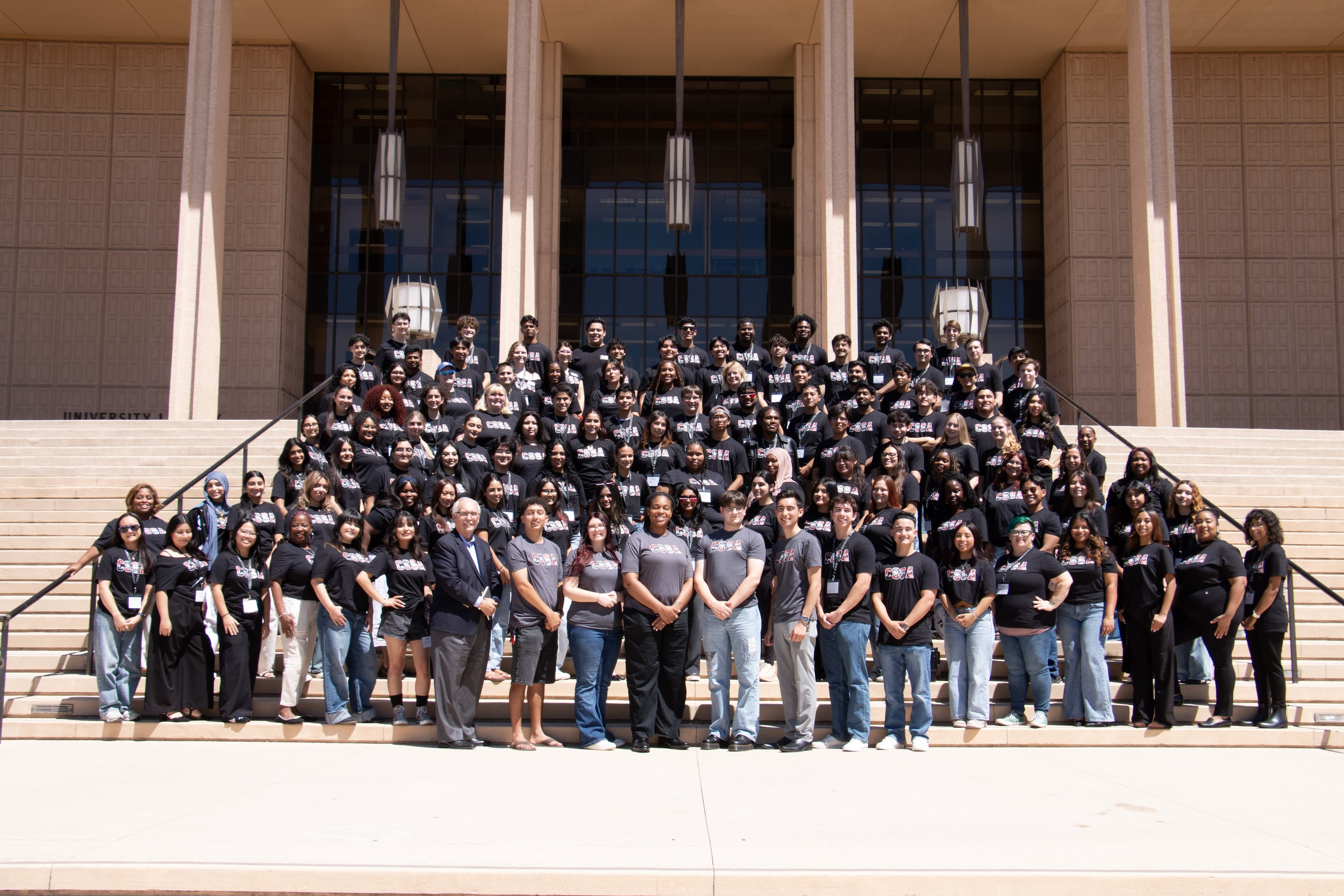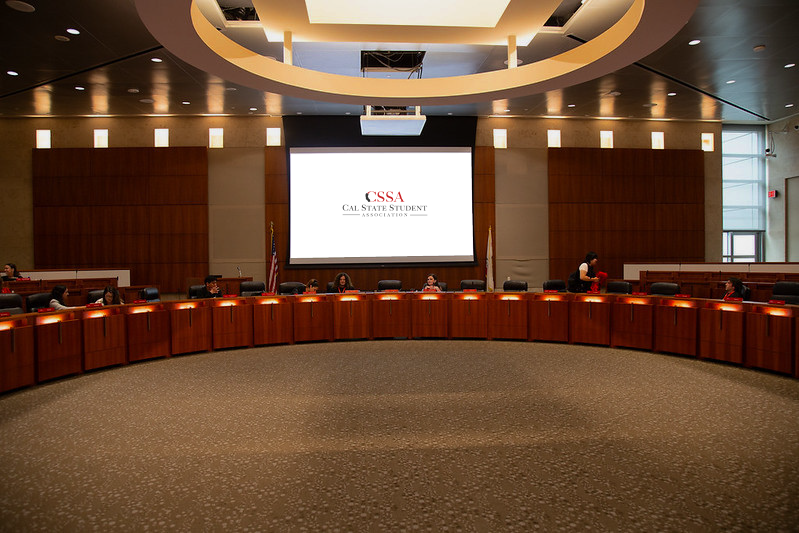
The California State Student Association (CSSA) held an in person meeting in January, covering a wide range of issues affecting students across the CSU system. Here's a breakdown of what CSSA is and what topics were discussed this past weekend.
CSSA is the governing body representing all undergraduate and graduate students enrolled in the California State University (CSU) system. It serves as a platform for students to advocate for their interests and concerns on a system-wide level. CSSA works closely with the CSU Chancellor's Office and the Board of Trustees to ensure that student voices are heard and considered in decision-making processes.
The AS President and Commissioner of Legislative Affairs attend these meetings to represent California State University, Chico. In the event they cannot, the Commissioner of Student Engagement and Advocacy attends as proxy.
CSSA Plenary | January 2026
Student Advocacy at a Critical Juncture: Tuition Reform, Budget Pressures, and Systemwide Action in the CSU
As California’s higher education landscape continues to shift, students across the California State University (CSU) system are facing mounting financial, academic, and structural challenges. Rising non-resident tuition, uncertainty around state and federal funding, barriers to student employment, and growing basic needs insecurity have made clear one thing: student advocacy is not optional—it is essential.
Over the past several months, student leaders at the campus, systemwide, and state levels have worked in coordinated and strategic ways to ensure student voices are not only heard, but reflected in policy, budget decisions, and institutional priorities.
Non-Resident Tuition Reform: Affordability and Stability at Stake
Non-resident tuition continues to rise across California’s public higher education systems, disproportionately impacting international students, undocumented students who are not AB 540–eligible, and out-of-state students. For the 2025–2026 academic year, the CSU Chancellor’s Office set non-resident tuition at $444 per unit, marking a $24 per-unit increase from the previous year and a $48 increase since 2023–2024. These increases compound quickly, particularly for international students who are federally required to enroll in at least 12 units per semester to maintain F-1 visa status.
At the community college level, non-resident tuition sits at $355 per unit, despite California Education Code § 76140(d) explicitly requiring increases to be gradual, moderate, and predictable. Sudden or fluctuating increases undermine affordability and create instability for students already navigating immigration restrictions, limited employment opportunities, and rising living costs.
In response, Fresno State Associated Students passed a resolution calling for reform of non-resident tuition policies. The resolution urges the CSU Board of Trustees, Chancellor’s Office, and California State Legislature to ensure tuition increases follow a predictable and transparent model. It also calls for cross-system collaboration with the UC Student Association and the Student Senate for California Community Colleges to pursue legislation that could cap non-resident tuition increases across all public higher education segments.
Employment Access and Equity: Advancing AB 713
Affordability is inseparable from access to employment. AB 713, a piece of legislation co-sponsored by CSSA, addresses a long-standing barrier faced by undocumented students: exclusion from campus employment due to lack of federal work authorization. The bill would prohibit CSU, UC, and California Community Colleges from disqualifying students from employment unless federal law or grant conditions explicitly require work authorization.
AB 713 also clarifies that federal prohibitions on hiring undocumented individuals do not apply to state government entities and affirms student employment as an authorized benefit under federal law. If implemented, the bill would expand equitable access to campus jobs—one of the few employment options available to many undocumented and international students.
Budget Reality Check: Advocacy Amid Fiscal Uncertainty
These efforts are unfolding during a challenging fiscal moment for California. The Governor’s proposed 2025–2026 budget totals $248.3 billion, with 10.5% allocated to higher education and $125.8 billion dedicated to K–14 education. Despite a nominal budget increase, state leaders have warned that revenue growth is largely driven by a small number of tech companies and may not be sustainable long term. The state is already projecting a $22 billion deficit by 2027–2028.
For the CSU, compact funding has been partially deferred, including the postponement of $100.9 million in Year 4 compact funding to 2026–2027. While the Governor’s proposal includes $264.8 million in Year 5 compact funding and a $143.8 million base budget restoration, students remain concerned about the long-term impacts on financial aid, course availability, and student services.
At recent Board of Trustees meetings, Student Trustees emphasized the need to align enrollment growth with adequate investments in housing, basic needs, and student support services. Questions raised included how campuses respond when students can no longer afford housing and how tuition and housing costs can become barriers to continued enrollment.
Systemwide Student Leadership: What CSSA Is Working On
Beyond legislation and budget advocacy, CSSA leadership has been deeply engaged in systemwide initiatives aimed at improving student wellbeing and institutional accountability. Key priorities highlighted in January 2026 Executive Reports include:
- Expanding 24/7 tele-mental health services to ensure students have access to licensed care outside traditional business hours.
- Title IX communications planning, including collaboration with the Chancellor’s Office to improve clarity and accessibility of reporting processes.
- Artificial Intelligence and workforce readiness, including the development of a CSU AI Student Canvas Course and an AI White Paper grounded in student survey data.
- Basic needs advocacy, through engagement with the California Higher Education Basic Needs Alliance (CHEBNA) and promotion of resources such as CalFresh, transit discounts, and emergency grants.
- Financial transparency and sustainability, including reforms to CSSA’s budget development process and increased education around the Student Involvement and Representation Fee (SIRF)
Student Trustees also reported on CSU-wide initiatives such as the Strategic Enrollment Framework, student housing planning, Title IX implementation, and the demonstrated economic impact of the CSU—generating $7.69 in industry activity for every $1 invested, and $35.53 when alumni impact is included.
Looking Ahead: Advocacy in Action
With advocacy milestones like the CHESS Conference and Advocacy Day approaching, student leaders are preparing to engage directly with legislators, trustees, and system leaders. Coordination across campuses, proactive legislative outreach, and civic engagement efforts will be critical in shaping policies that affect tuition affordability, financial aid access, employment equity, and student success.
At its core, this work is about protecting students—especially those most vulnerable to policy shifts and budget cuts. Through coordinated advocacy, informed leadership, and collective action, students across the CSU system continue to demonstrate that they are not only stakeholders in higher education, but leaders shaping its future.
The next plenary meeting will be held on February 21 & 22, 2026 virtually. Plenary meetings are open to the public in accordance with Gloria Romero Open Meetings Act of 2000. Meetings take place monthly (with the exception December and June). The agenda for regularly scheduled meetings are posted no later than three (3) days prior to the meeting date. For more information or to voice your concerns, please reach out to your elected student representatives.
Gia Monticello is the current Commissioner of Legislative Affairs for the Associated Students. Originally from the East Bay Area, this is her first term serving in the AS Government. She is a First-Generation student majoring in Liberal Studies with a minor in Special Education. As Commissioner, Gia is committed to educating students about state and CSU systemwide legislation that impacts their college experience. To reach out to Gia, email her at as-legaffairs@csuchico.edu.