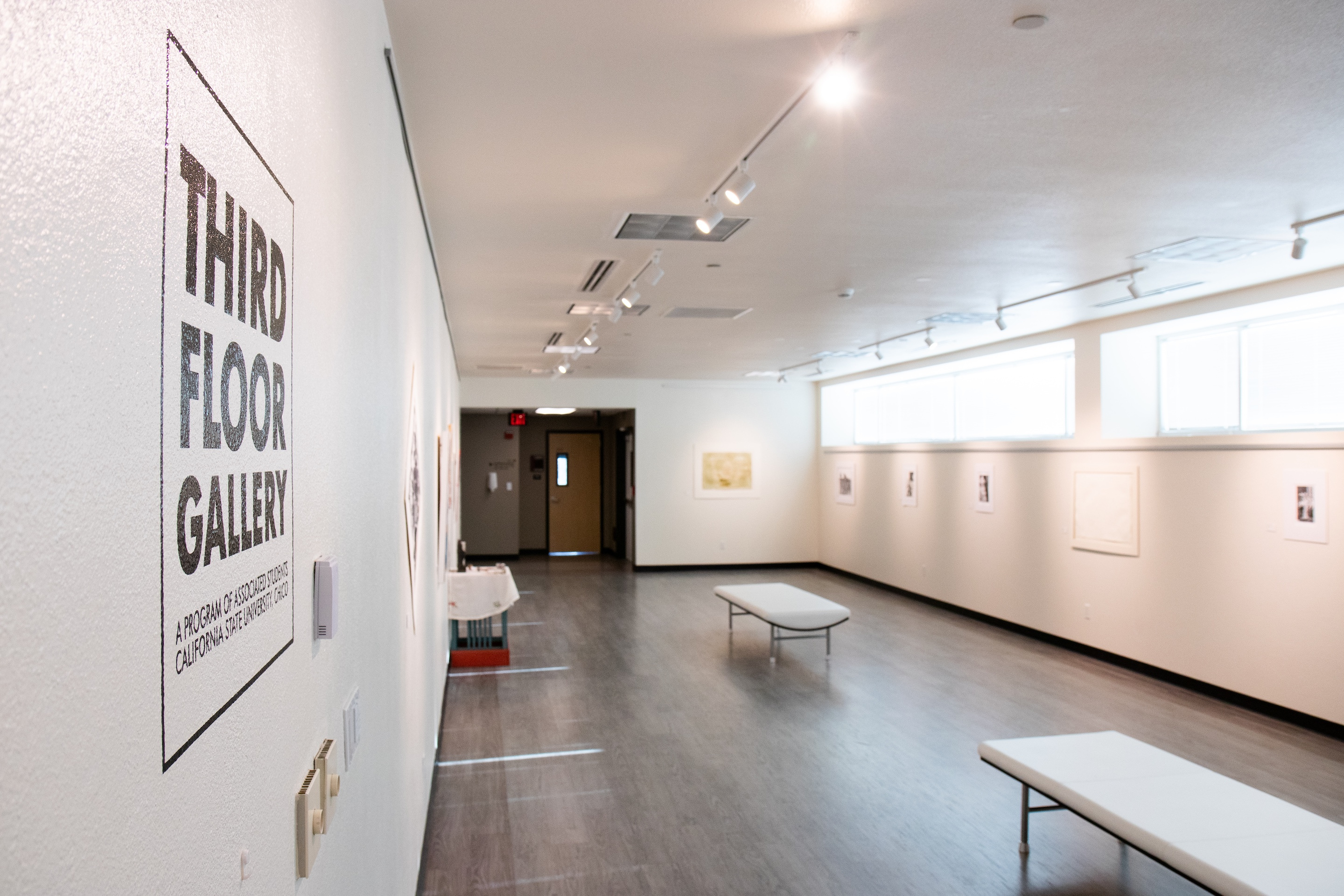
What encouraged you or pushed you to have an exhibit at the Third Floor Gallery?
Cynthia: My idea was to highlight and showcase a small group within the art department that I had seen since my first semester here. Although we can’t have a group show in the Ayres building, we wanted to celebrate the bond that there is between people you can relate to, especially as a minority.
Kelly: I found a community here at Chico State with Amaris and Cynthia. When Cynthia mentioned that we should have an all Chicano show. I thought it was a great idea. Representation is so important. I wanted to make this happen in spring as it was Cynthia last semester here. I hope we can keep the momentum going and have a Chicano/Chicana show of some sort every year.
Amaris: What ultimately led to me participating in this exhibit were some of my contemporaries whose names are Cynthia Saucedo and Kelly Sprengelmeyer. I would like to thank them for staying persistent about having a show and including me in their vision to create a space where voices can be heard.
What has this exhibit’s exposure done for you?
Cynthia: This exhibit is prepping me for my solo exhibition that I will have in April, allowing me to understand what is expected of me in an even greater scale.
Kelly: Fortified me and encouraged me to reach higher.
Amaris: This exhibit has brought me a sense of what it could be like to have future collaborative shows or even shows of my own. It also has brought me a sense of belonging with the people I have made connections with here at Chico State.
What is the theme of this gallery/ why was the name you chose decided on?
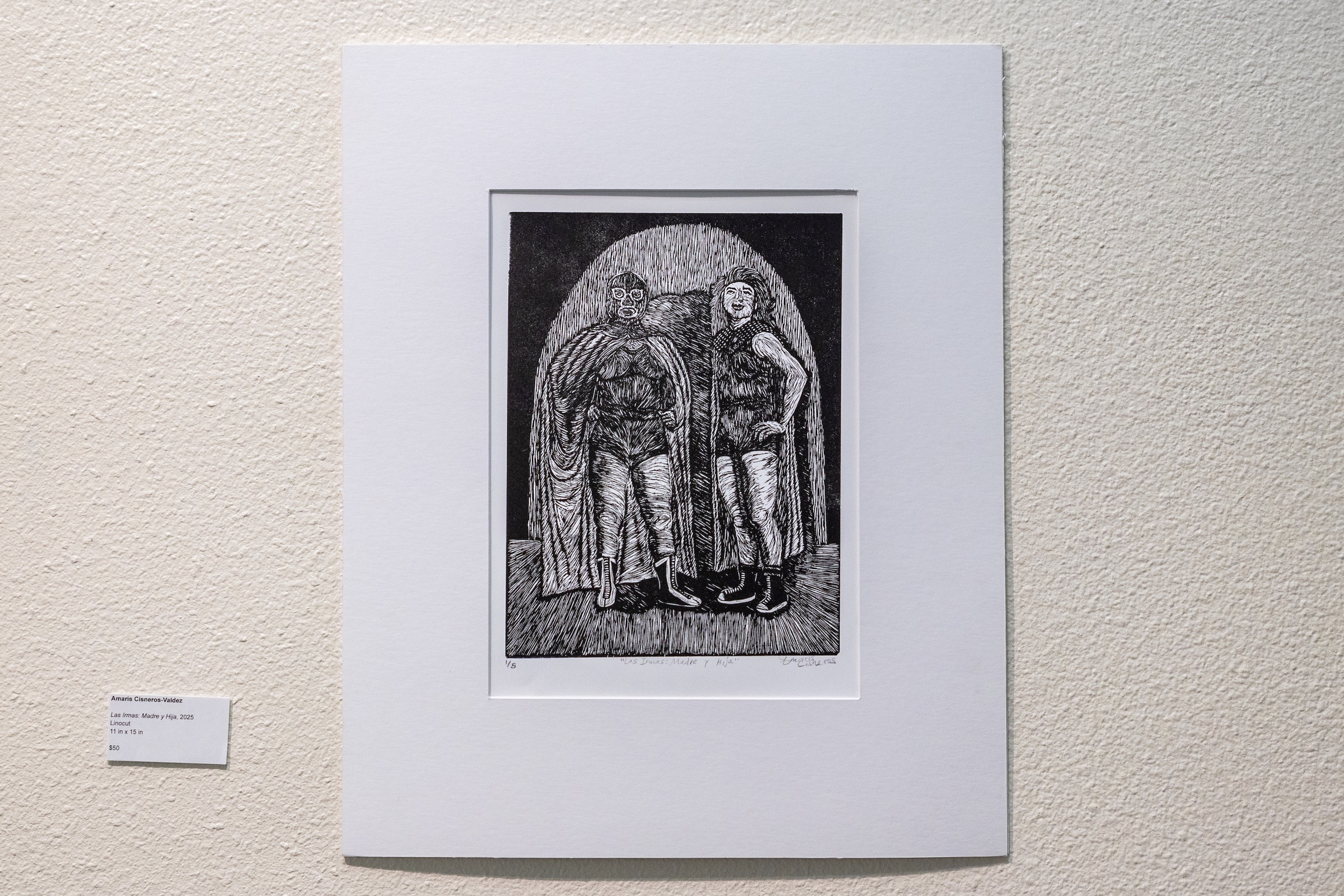
Cynthia: The overall theme was pride and identity. We’re proud of our identity as Latina women and I think that right now is the most important to have that sentiment without feeling shame or embarrassment— Sin Vergüenza meaning without shame.
Kelly: For me, the theme is about connecting to my roots. It is from the perspective of three Chicana women coming from different walks of life and various ages. Our experiences are similar, but also very different. ¡Sin Vergüenza! means without shame. It's about claiming our identity proudly, loudly.
Amaris: The overall theme was about cultural identity and being unapologetically Chicana.
How did you name your pieces (art, photos, sculptures, etc)?
Cynthia: My pieces are always named in Spanish. I rarely name them right after I create them, it usually comes to me later on but I always try to have a funny, play on words in Spanish because that’s how my family and I talk.
Kelly: When I work the art comes first, the titles later. It takes me a while to articulate what I was feeling when I created the piece. Much of my work centers in memory. My blind embossment titled ‘Invisible Labor’ was made with hand crocheted doilies like the ones my grandmother made and taught me to make. The print is about my connection with her, but it’s also about the hours of work women do, that goes unseen, unlauded—simply taken for granted.
Amaris: I name my pieces as I go, I usually tend to have an idea beforehand of what the name is going to be for each specific piece.
How did you choose the order in which your work was displayed?
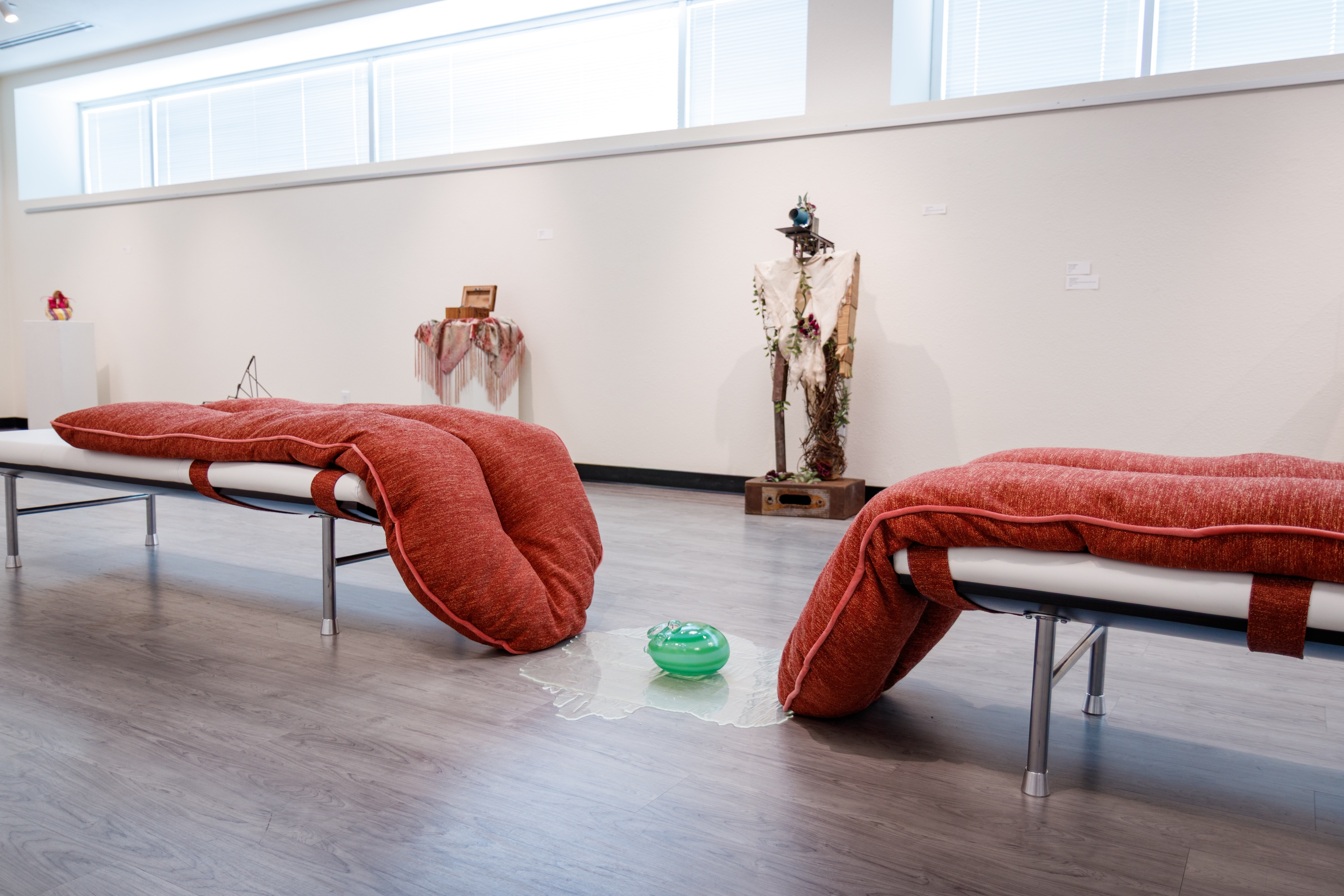
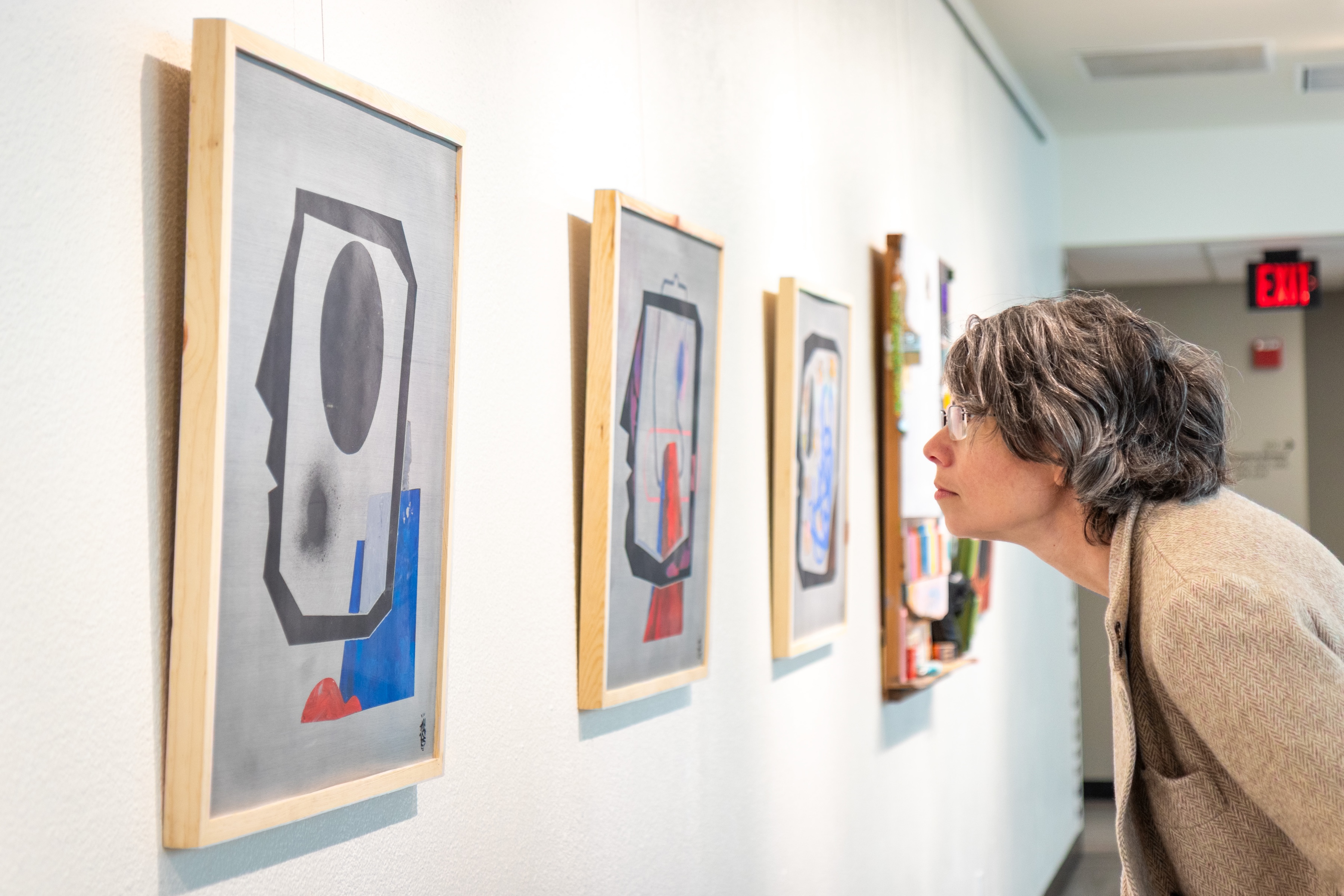
Cynthia: The order of works always goes together based on size, imagery and color. I think we all wanted to be spread out but have pockets of overlapping imagery from each others work be near one another.
Kelly: I wanted some sort of symmetry in the gallery, both in size and color. We also wanted to intermingle our pieces as this show was a collaboration, not just a grouping.
Amaris: We made a decision to put the piece “Raíces del Valle Central” which was on the show poster as the first piece you see walking into the gallery to draw people in. We also agreed to strategically place our artworks in a cohesive mix between the three of us to invoke the connection we share as Chicana women and artists.
Which pieces are your favorite/ or what you're most proud of?
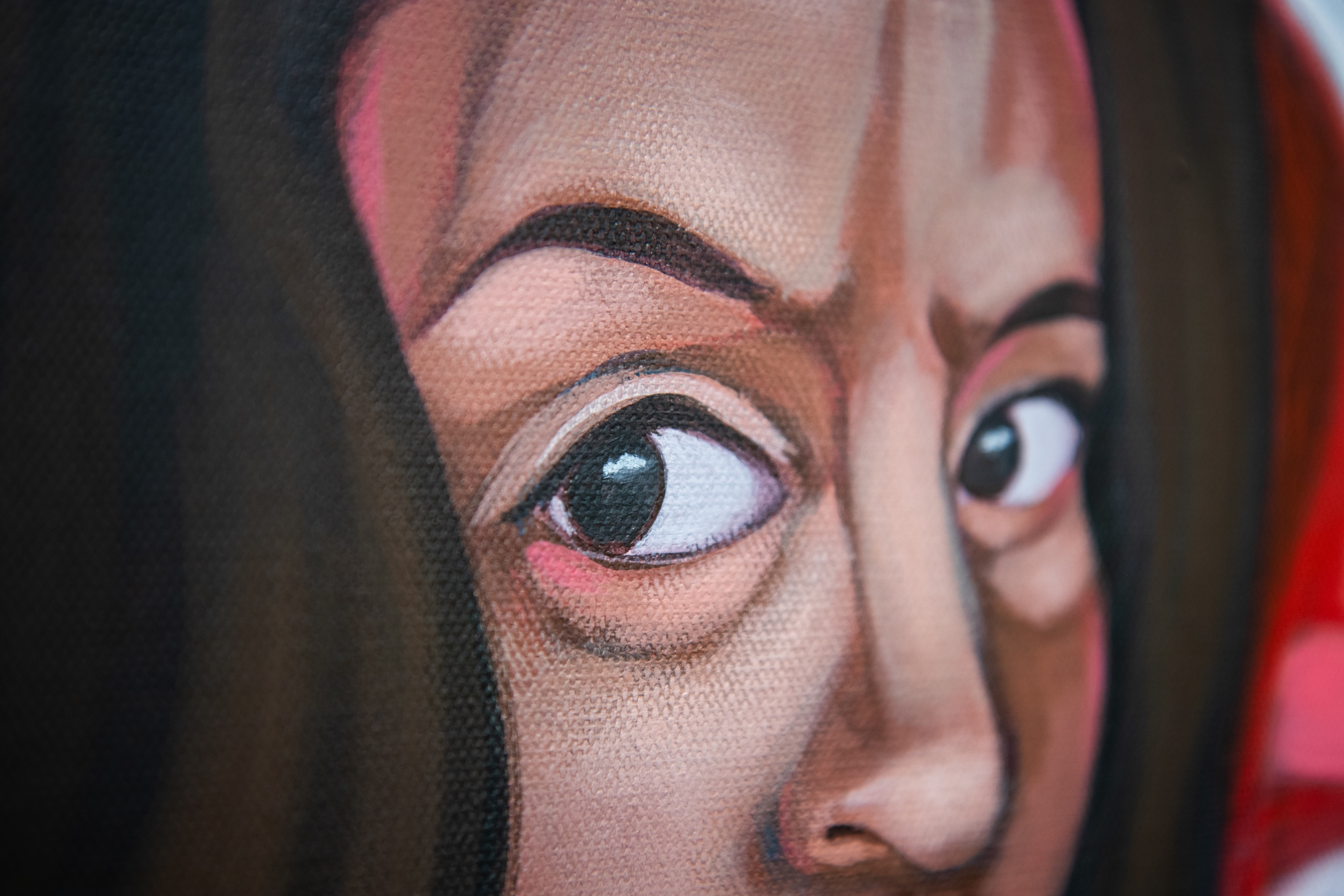
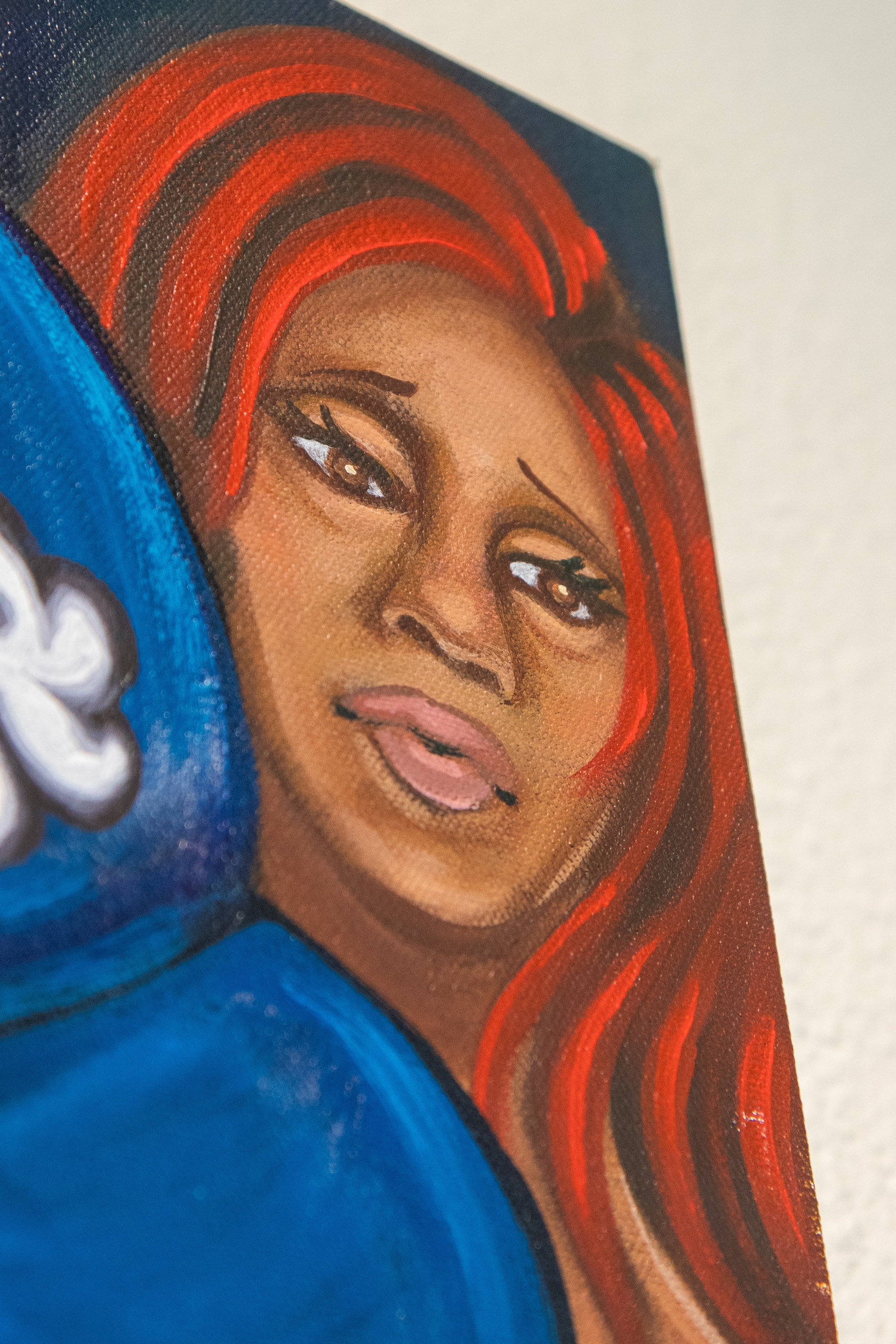
Cynthia: I’m most proud of my Sin Miado painting. I grew up watching cartoons, seeing artist tags and lowrider art so for me to be able to try and recreate that was really fun for me. It came from a place of anger, expressing what I feel from the current immigration raids but it turned into something humorous but still with a message.
Kelly: I am most proud of my piece ‘Barely Legal’ which superimposes a picture of myself as a child and a picture of my grandfather’s naturalization papers which he earned by enlisting in WWII. As a young man he became a United States citizen but was still considered a foreigner for the rest of his life. It also alludes to SA of a child. The print was made with the natural pigment that is photo sensitive and will eventually fade to nothing with uv light exposure. It’s a fading hazy memory.
Amaris: My favorite piece was “Raíces del Valle Central” because it captures a personal story of being from the Central Valley and my cultural identity. It ties into the exhibition's name !Sin Verguenza! which translates to without shame. As I grow older and wiser I remember to share my roots to the central valley and upbringing in a Mexican household.
What materials did you use for your work (supplies, cameras, equipment, etc)?
Cynthia: I use acrylic paint on canvas and drilled in hooks to connect to the wires.
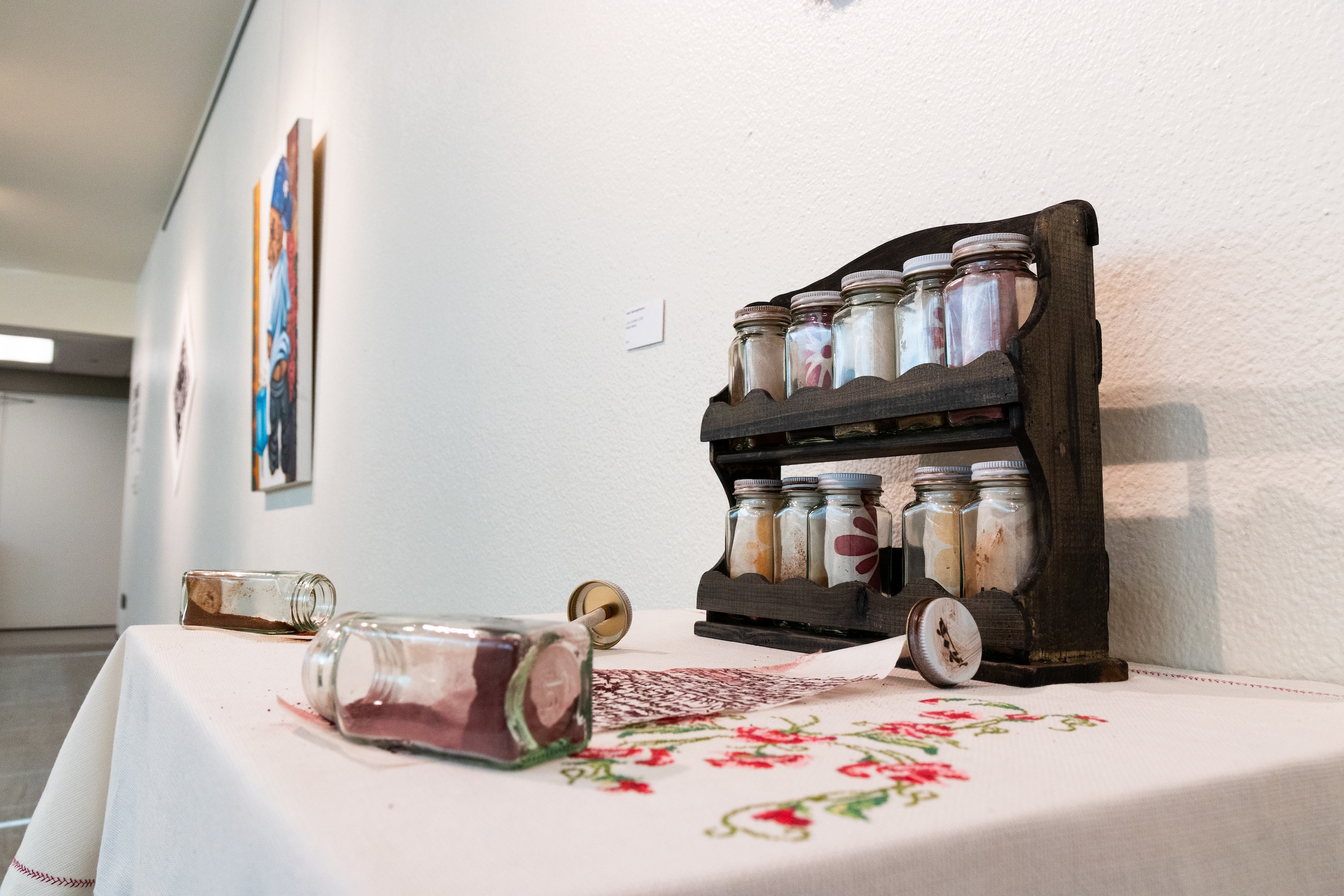
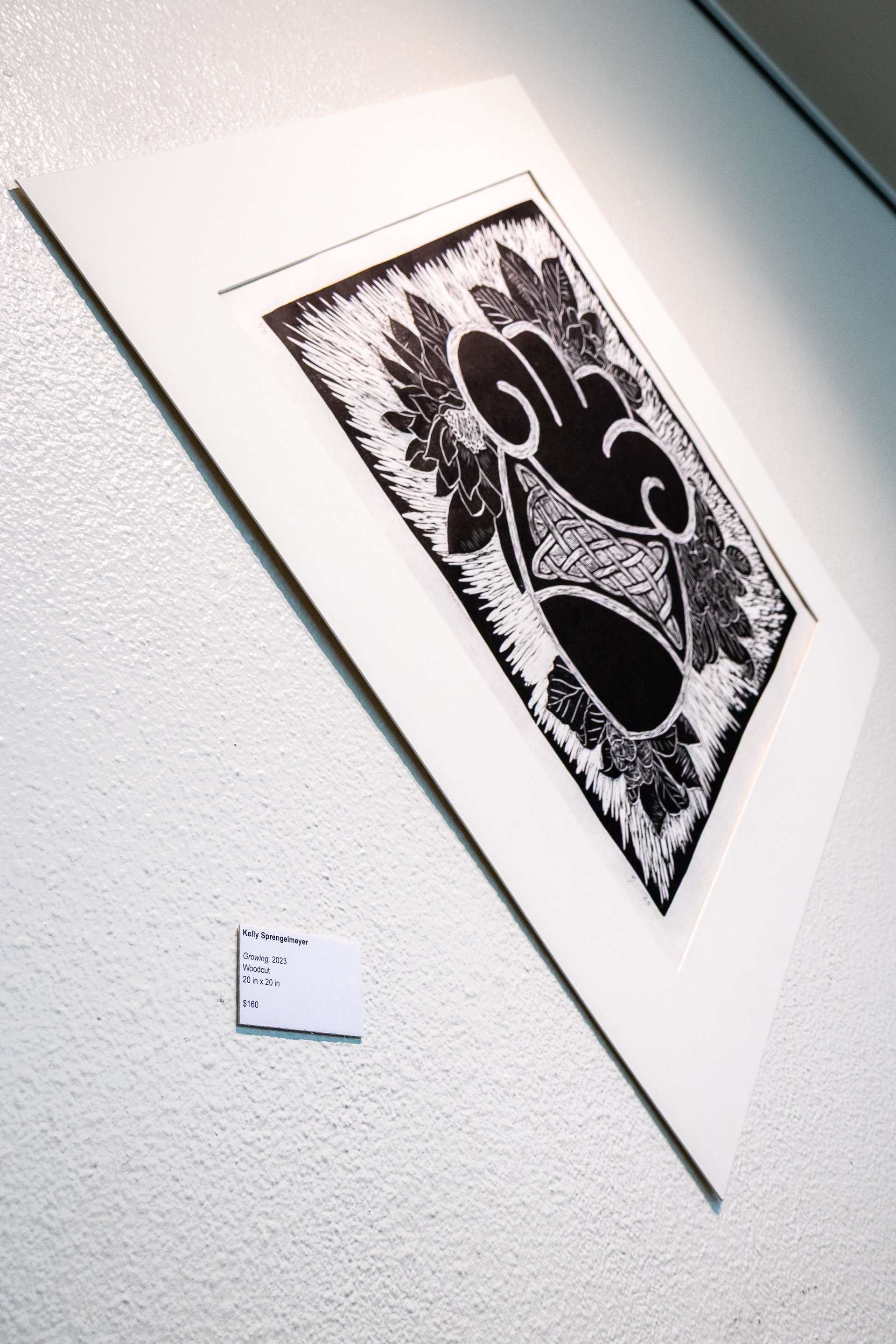
Kelly: I use traditional materials in print, cotton or eastern papers with ink, but in a lot of my work I use food and spices. Corn husks, spices like cinnamon, cacao and hibiscus have been finely ground and added to transparent ink in ¡Con Cuidado! In ‘Barely Legal’ the juice of spinach and basil was used to coat the paper before exposing to sunlight.
Amaris: For my art pieces, I used a number of methods in printmaking such as relief printing and lithography. I had used matte board to frame prints and command strips to keep the print closed and hung on the wall.
Would you recommend/ have another exhibit in the gallery?
Cynthia: I would recommend and hold another exhibit in this gallery if I could. It’s on campus, in a popular building and is very well designed for a nice amount of space.
Kelly: Absolutely! It was a great experience, it is an accomplishment I can add to my CV or artist’s resume and it was very gratifying to interact with the audience at the reception.
Amaris: I would definitely recommend having a show in the BMU third gallery floor and I plan to return to have another show in the near future.
How long did this collection of work take to put together.
Cynthia: It didn't take long. The three of us are constantly working and having new projects so it accumulates pretty fast.
Kelly: The work I contributed to the show was done over the span of three years.
Amaris: This collection of work accumulated quite nicely as we individuals are all driven and are frequently creating work.
What inspires you as an artist and how does it relate to this exhibit?
Cynthia: My art is and forever will be inspired by my culture. I am first generation so I grew up in a very traditional Mexican household. When I create, I think of my mom, my ninos, my tios, and everyone that is living proof of the beauty that comes from my culture.
Kelly: My family and culture inspire me. I am half Irish and half Mexican and have always grappled with walking in two worlds. This work is a declaration of my identity.
Amaris: Something that inspires me as an artist is the strong women that surround me, especially my mother. I hope to carry the struggle, pain and joy that my people experienced before me and use it to create positive change. To teach generations after us that it is possible to pursue your dreams and still remember where you came from.